


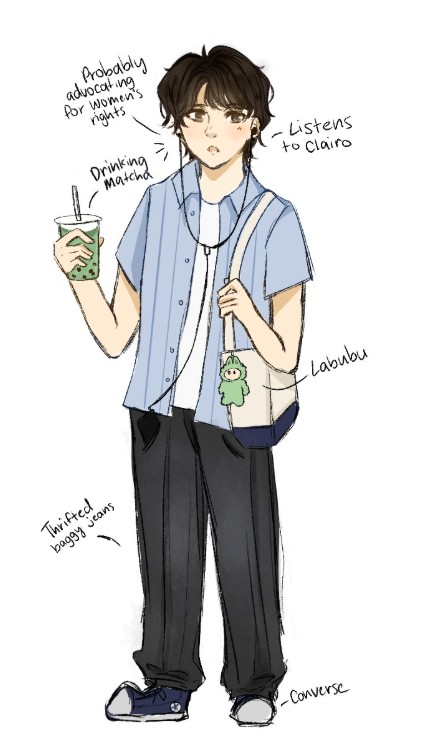
If you’ve been on social media at all in the past three months, you’ve seen them. Labubu toting, matcha swirling, Clairo-listening men who cling to their feminist books like shields to beat the misogyny accusations. They are known as “performative males” and originally rose to fame based on actual concerns from women that these men were portraying themselves to be “ideal” to get with women.
These sincere warnings took off into the parody and prank spaces of social media, ranging from obviously staged skits of “performative males in the wild” to genuine secret recordings of men in public that fit the stereotype one way or another.
But what is a performative male anyway? The general consensus online is that someone qualifies as a performative male when they are obviously using feminist terms, literature, and cultural aspects (like popular female artists) as a lure to potential partners. These men are often wearing a “soft boy” style, consisting of loose clothes with muted or earthy colors. They sport soft hair and faces, and are cited as using tote bags as their bag of choice and drinking matcha lattes. The performative aspect comes from the notion that the men who were originally called out for this were not genuine in their presentation; they only put on this front to serve as a mask for toxic behavior.
What started as an innocent warning inspired skits, lookalike contests, and “starter kit” memes that were all in good fun–at first. The lighthearted jokes evolved into actual ridicule and taking pictures and videos of random men without their knowledge, with captions like “bro is not real” and “performative male final boss”. To make matters worse, the men who held these traits now associated with the performative male stereotype have become unable to express themselves freely without being called “performative”.
The whole subculture transformation is eerily similar to another movement from just ten years ago: the hipsters. Hipsters were known for thick moustaches, flannel shirts, beanies, and being overly into coffee. They originated on Tumblr as a “new age man,” sensitive and coolheaded. This sparked almost the same response: jokes into teasing before finally sputtering out.
Being a hipster was being alternative–listening to indie music and wearing clothes no one else was–but when one in four millennials were like that, it wasn’t all that unique. Like performative males, the people who actually held these alternative traits were called “fake” and “just following the crowd”. The cycle has repeated itself again, new subculture, same effect.
No matter the color (or plaid pattern) of the leaves, the roots are the same. The undertones of the relentless teasing of predominantly male subcultures are far more sinister–even if the people doing it don’t realize it. Men making fun of other men, calling them “not real men” or “feminine” for traits they genuinely possess echo the rampant homophobia experienced by effeminate men for decades. Plus, it associates these often positive traits with femininity in a harshly negative light, looping in misogyny and gender comparison.
But what about that warning? The initial thought behind performative males was a man making himself more appealing to women. Now that the trend has exploded, women can’t tell whether their partners who hold these traits are performing or not. Men are afraid to express themselves, because what started as a lure is now a repellent. Women will automatically see a man reading in public and assume he’s performative, whether he is or not. People can’t enjoy matcha without being asked if they listen to Clairo too. The performative males have met their fate, but who’s next?